
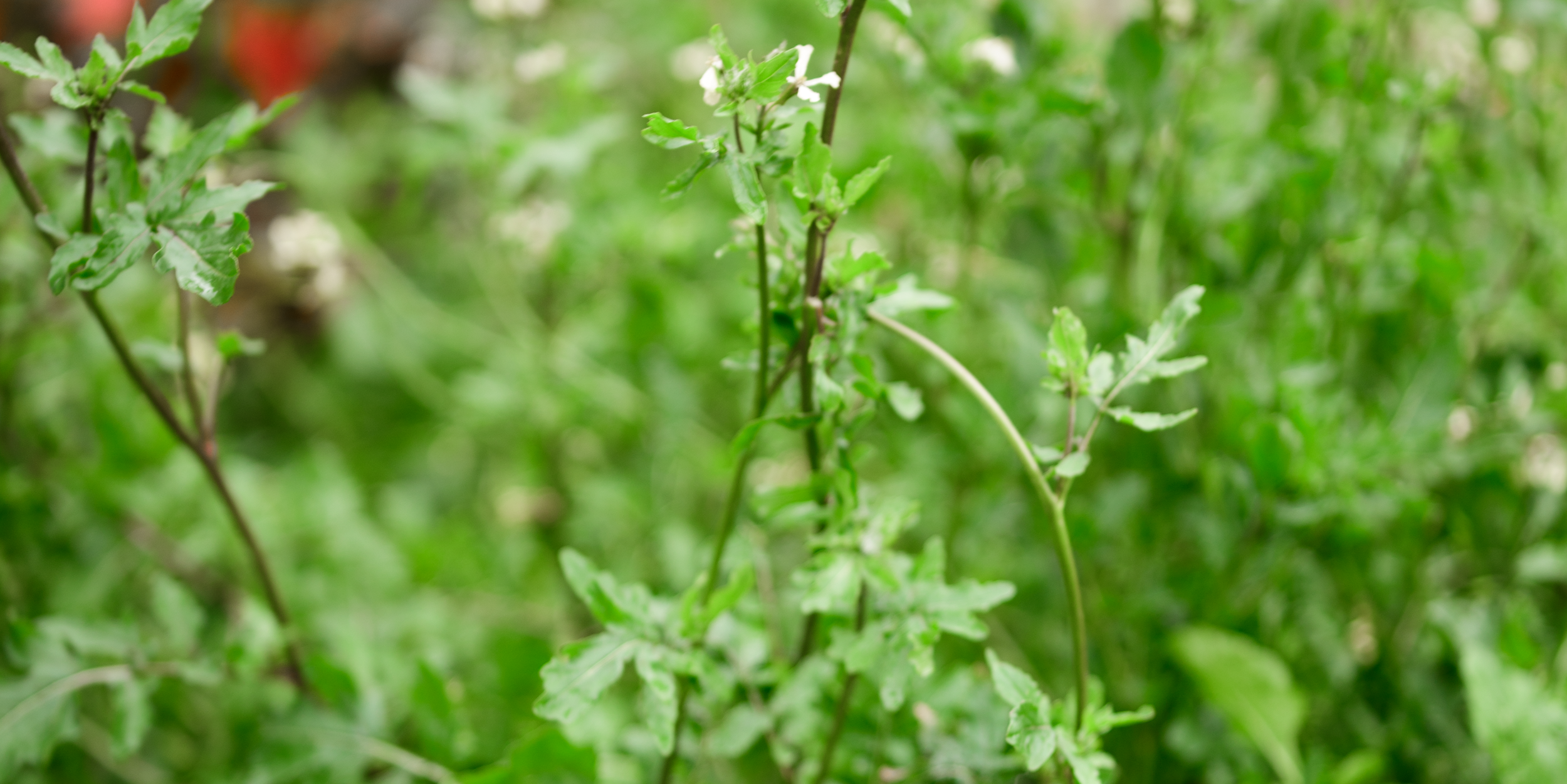
Our approach combines regeneration, water cycle restoration, beauty, and function.
Working with nature, not against it.
Our regenerative design framework.
Healthy landscapes are shaped by relationships: between water and soil, plants and pollinators, people and place. Our work focuses on restoring ecological function while creating spaces that are productive, resilient, and deeply connected to their environment. We co-create all landscapes, from backyards to large community projects, with a balanced approach that combines four crucial ingredients: regeneration, water cycle restoration, function, and beauty.
Regeneration.
Our name is our call to action. Regeneration means actively improving the health, resilience, and ecological function of a landscape over time, not simply sustaining what remains. Our work focuses on rebuilding relationships between water, soil, plants, wildlife, and people through regenerative land practices that strengthen biodiversity and support healthier living systems.
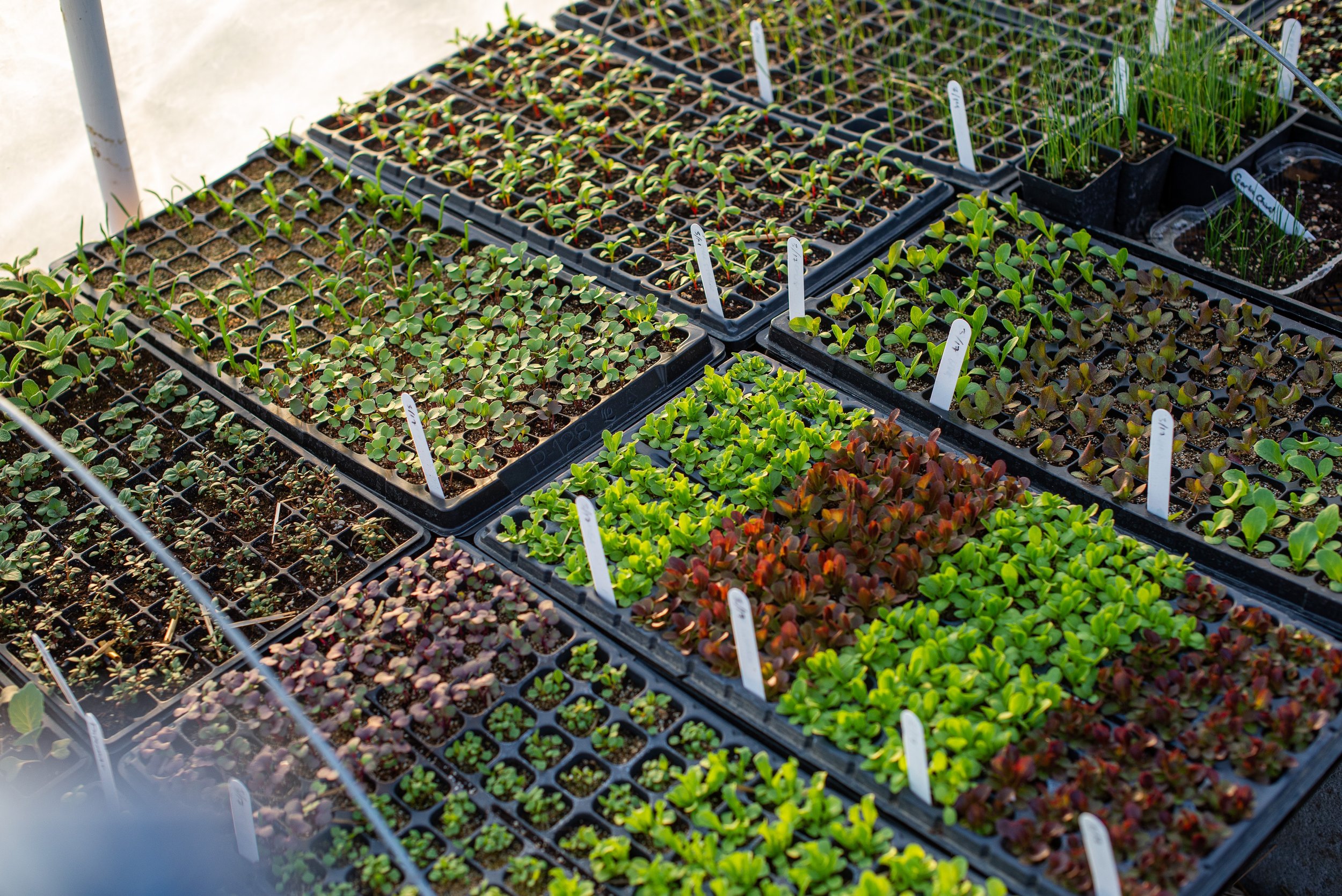
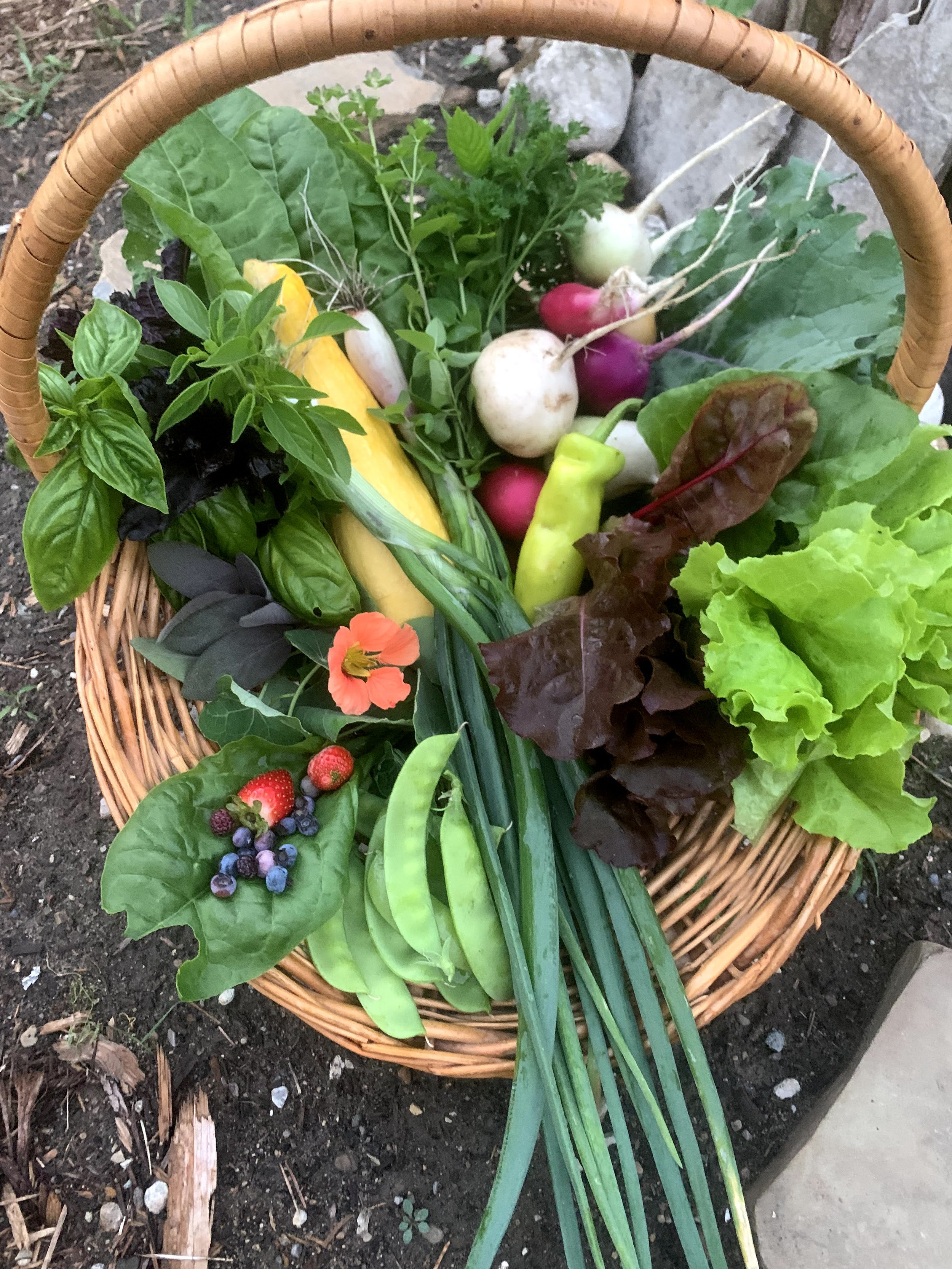
This can include water cycle restoration, soil-building methods, native and perennial planting, habitat creation, food production, and low-disturbance growing systems designed to support life above and below the surface. Rather than imposing rigid systems onto the land, we observe how a site already functions and work with those patterns to guide long-term stewardship and ecological restoration.
Curious about some of the terminology behind these methods? Check out our ecological language “cheat sheet” for a deeper dive into the concepts that shape our work.

Water Cycle Restoration.
Water is one of the planet’s most vital natural cooling systems - it’s our built in A/C! In fact, water regulates 70-95% of the heat dynamics of planet Earth. In healthy ecosystems, water is slowed, absorbed, stored, and cycled through soil, plants, waterways, wetlands, and the atmosphere, helping regulate temperature, build soil, support biodiversity, and stabilize climate systems.
Much of modern land use has disrupted these cycles through deforestation, soil degradation, pavement, wetland loss, and extractive agricultural practices. Instead of soaking into living systems, water now often rushes across the land, contributing to flooding, drought, erosion, biodiversity loss, and rising temperatures. While climate conversations often focus heavily on carbon, water cycle degradation is increasingly being recognized as a major missing piece of climate change remediation.
Water cycle restoration acts as a foundational lens through nearly all of our work. Our work focuses on helping landscapes hold and cycle water more effectively through soil health, vegetation, perennial systems, watershed awareness, and shaping land to slow and infiltrate rainfall. When water begins functioning more naturally within a landscape, many other systems begin healing alongside it. Read more about water cycle restoration here.
Function.
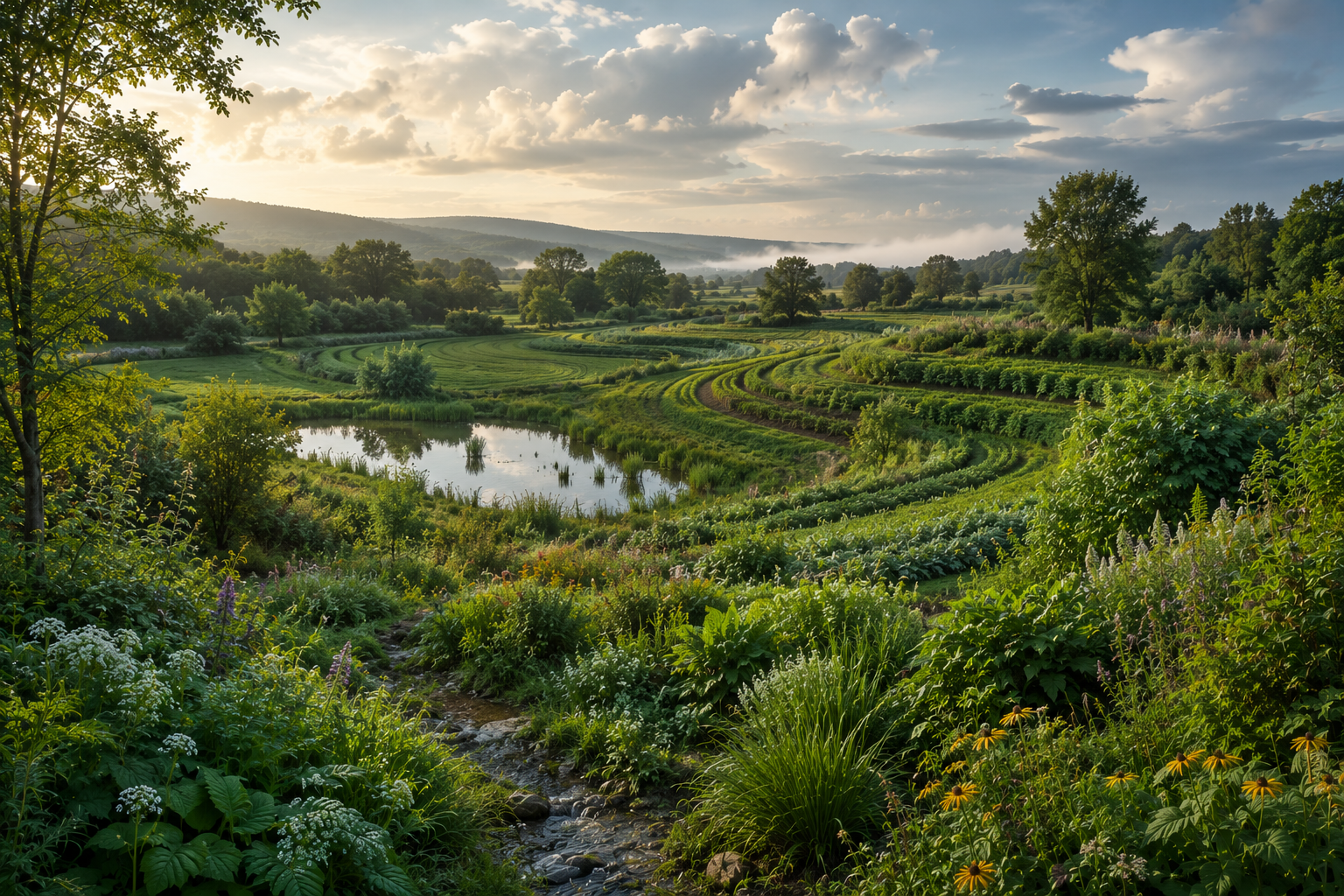
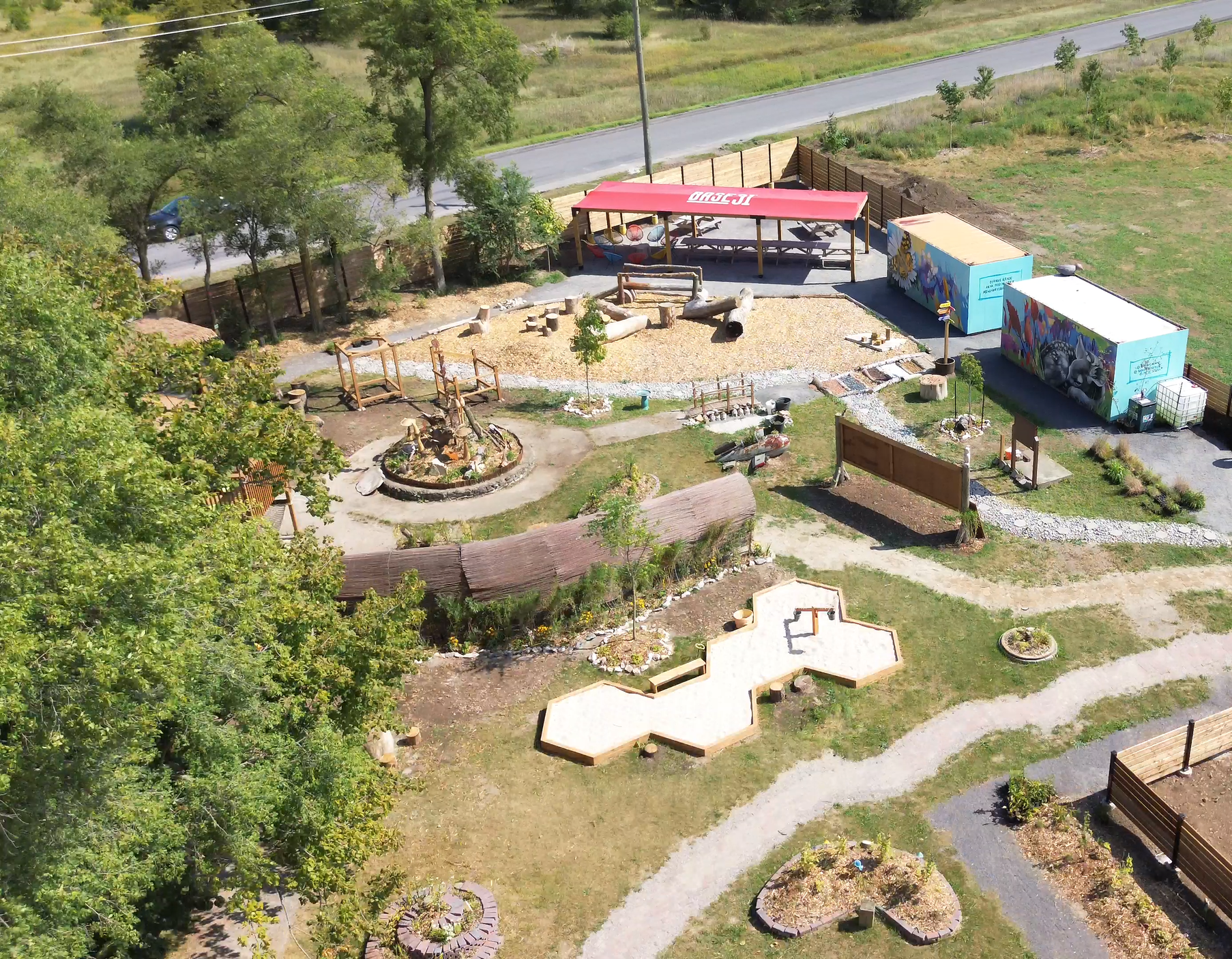
In living systems, function extends far beyond a single human use. Every element within a landscape has the potential to serve multiple roles simultaneously: holding water, building soil, creating habitat, producing food, supporting pollinators, moderating temperature, educating people, or contributing beauty and meaning to a space.
Our approach considers how each part of a landscape can work together as part of a larger interconnected system. Rather than relying on high-input, isolated solutions, we prioritize layered and regenerative systems that become more resilient, productive, and ecologically supportive over time.
Function also means designing spaces that are genuinely usable and supportive for the people stewarding them. Productive growing spaces, educational landscapes, gathering areas, habitat corridors, and water-conscious systems can all coexist when approached through a whole-systems lens.

Beauty.
Beauty plays an important ecological role. Spaces that draw people in are more likely to be cared for, protected, and meaningfully engaged with over time.
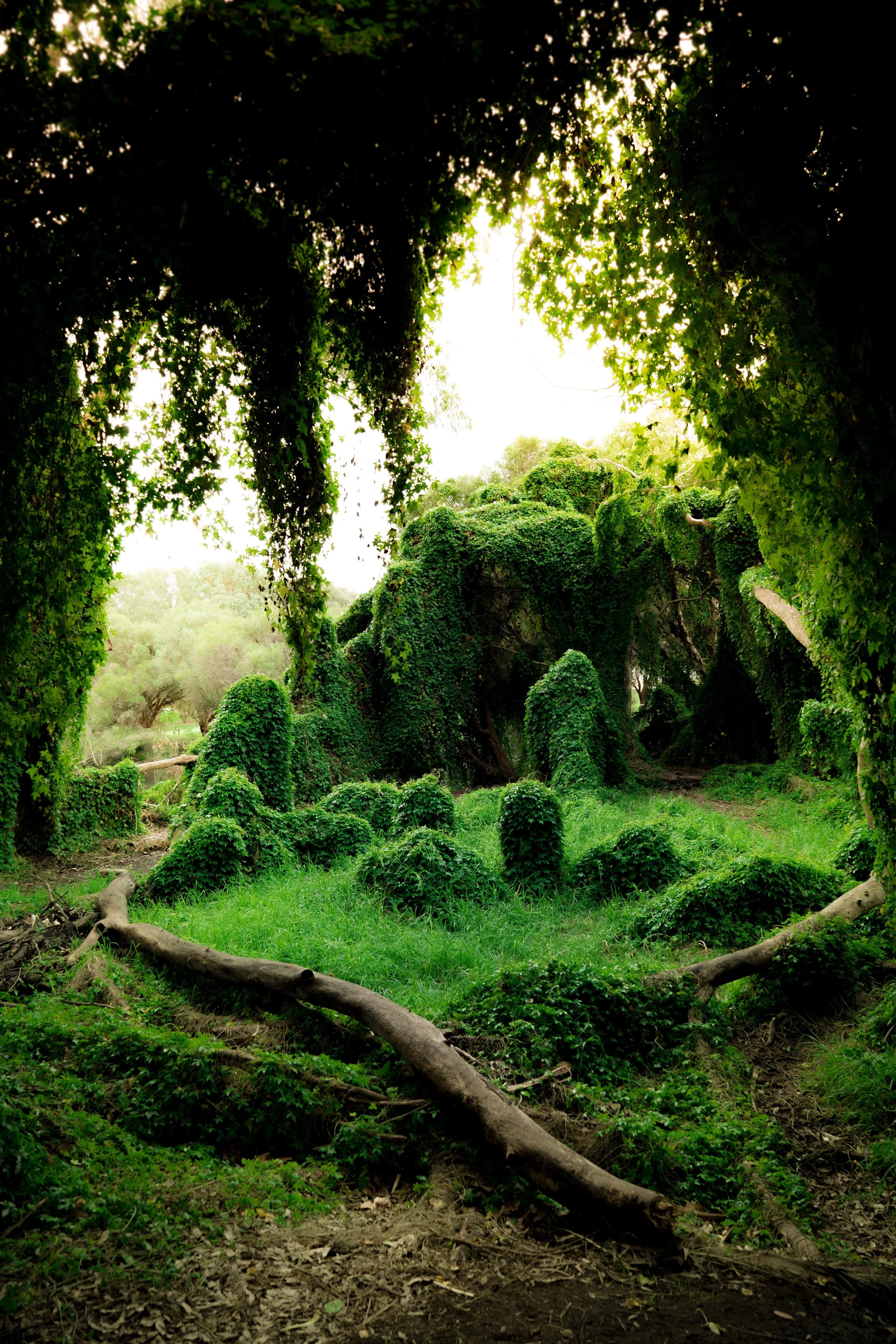
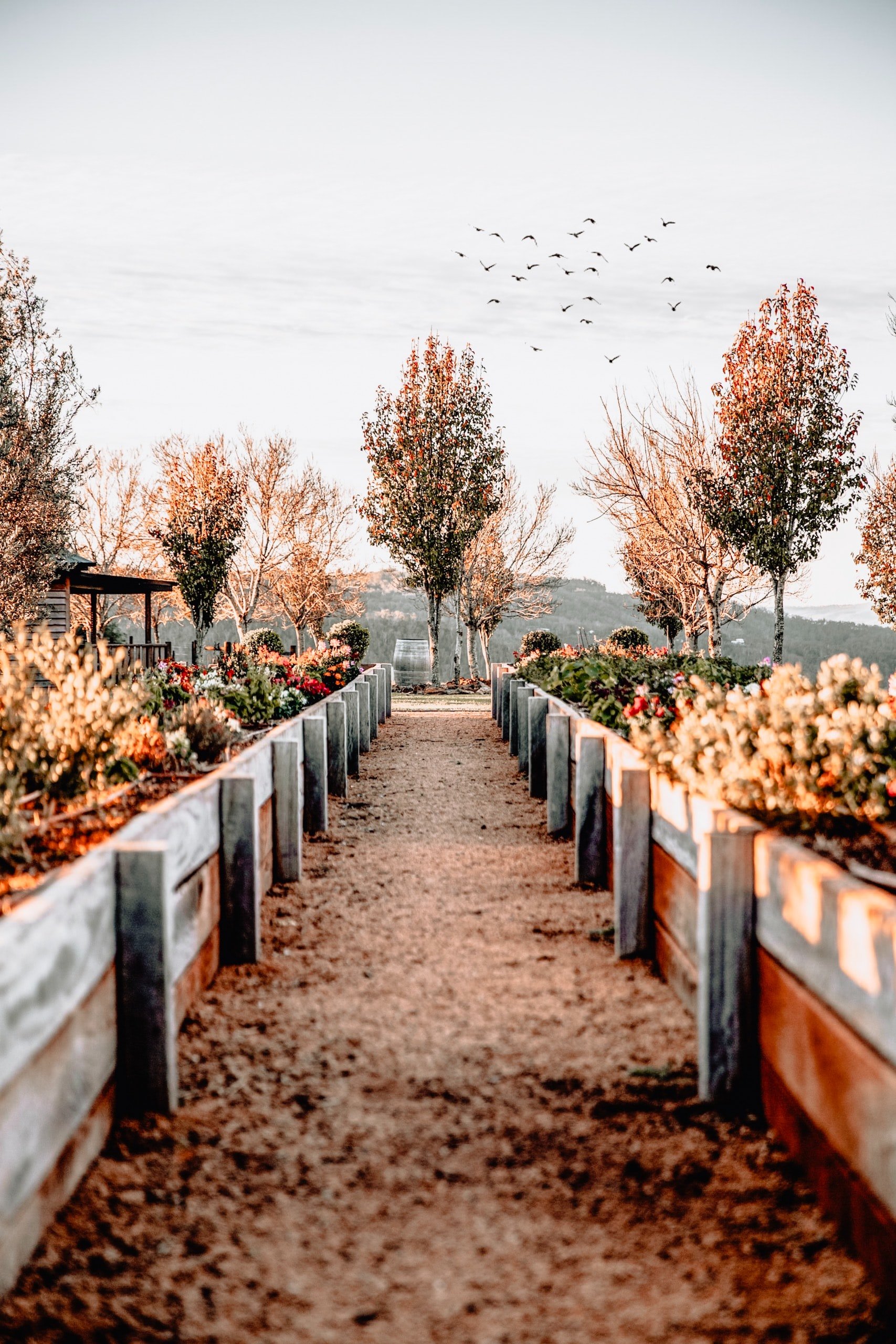
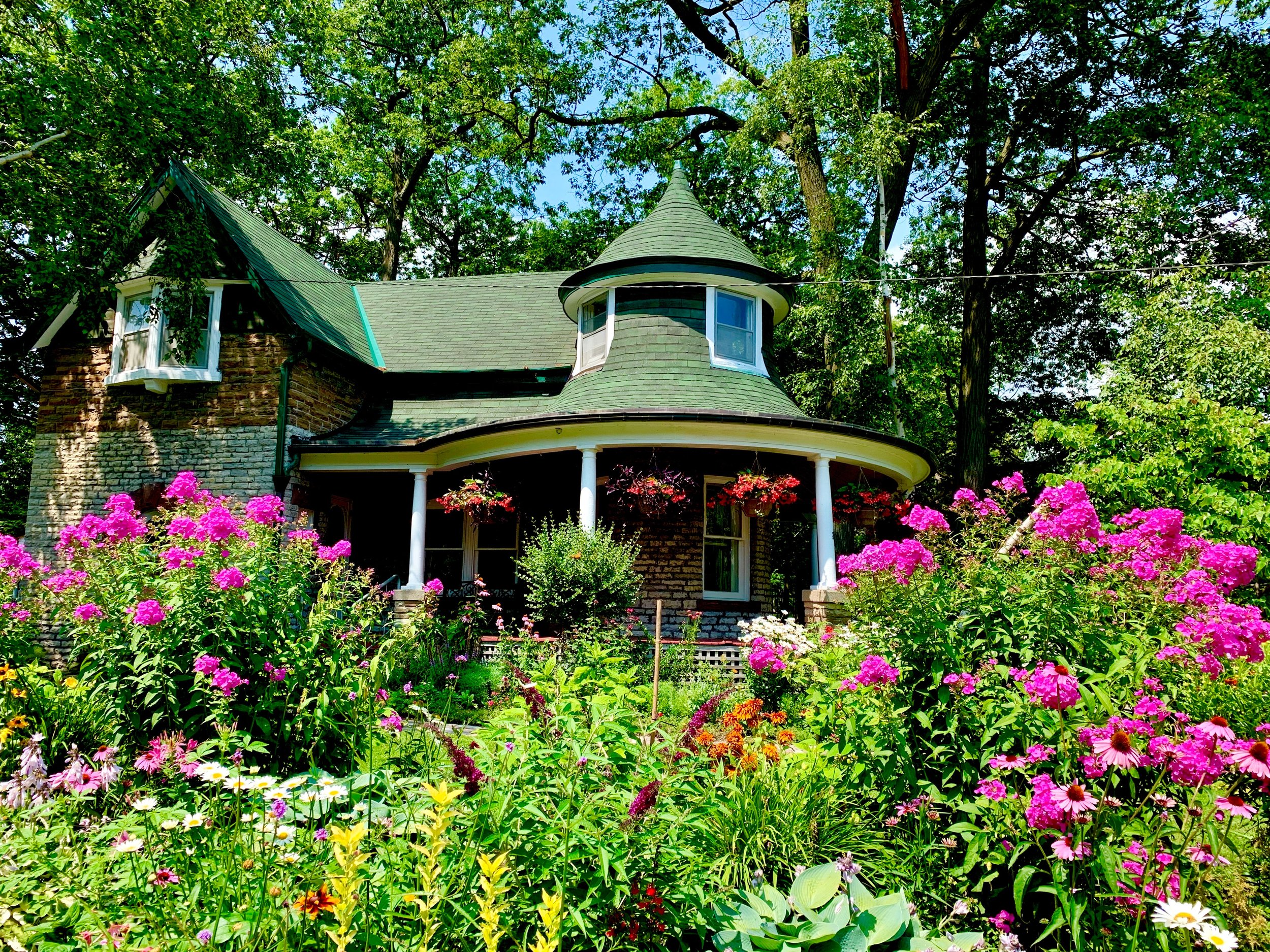
We design landscapes that feel alive and connected to place by working with natural patterns, layered planting, seasonal change, texture, movement, and biodiversity.
Rather than separating beauty from function, we believe the most compelling landscapes are those where ecological health and human experience strengthen one another.

Guiding Principles
Work with living systems, not against them
Observe and respond to the unique patterns of each landscape
Restore water before solving climate symptoms
Build soil as living infrastructure
Recognize beauty as part of ecological function, not separate from it
Create spaces that nourish curiosity, connection, and biodiversity
Design for long-term stewardship and resilience
Value relationship, reciprocity, and responsibility to place



Collective Action
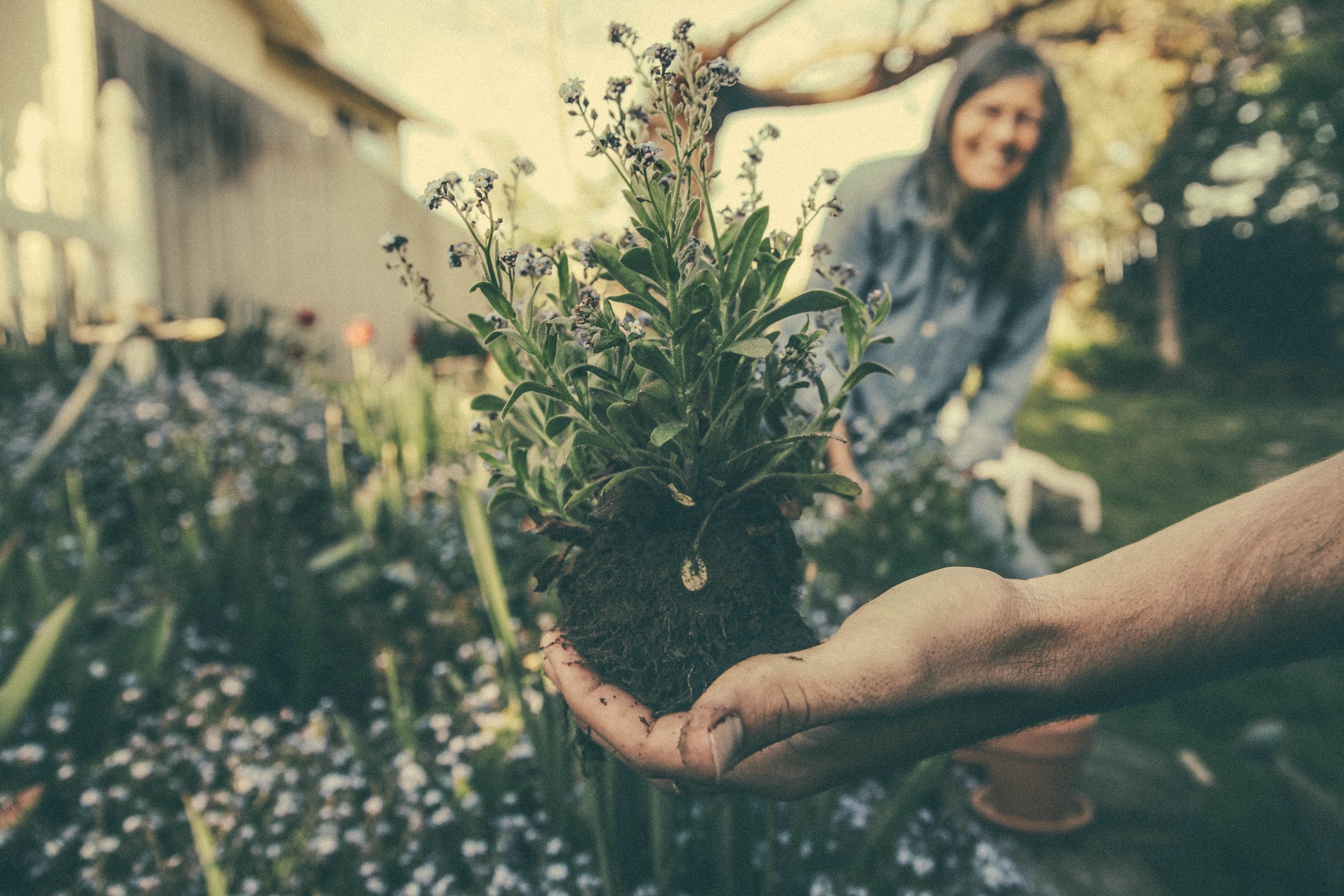
Regenerative work is most powerful when it is shared. We believe restoring landscapes also means rebuilding relationships between people and the places they inhabit. Through collaboration, education, local knowledge, and community participation, landscapes become more resilient and more deeply cared for over time. Whether through workshops, shared growing spaces, educational elements, or collaborative implementation, the goal is not simply to complete a project, but to strengthen long-term stewardship and connection to land. These are all integral parts of how we ensure your project is truly regenerative.